Your Professional Medium Filter Element Supplier
Xinxiang JUN Filters and Chemical Co., Ltd, established in 2017, is a professional engaged in the research, development, sale and service of hydraulic oil filters, air filters, stainless steel filters, sintered felt filters, water filters, wedge wire screen filters, oil filter elements, all kinds of filter housings and RO membranes.Quality first is We since its inception has never changed commitment, It represents the pursuit of continuous progress.
-
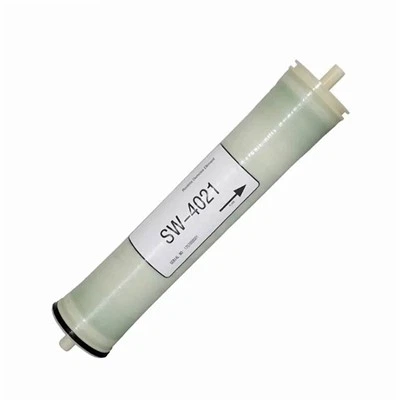
![JUNLV Fiberglass 10 Micron Pleated Water Filter For Reverse Osmosis]() JUNLV Fiberglass 10 Micron Pleated Water Filter For Rever...1.JUNLV Fiberglass 10 Micron Pleated Water Filter for Reverse Osmosis.Factory price 10 μ m replace 3M high flow PP filter cartridge, high-precision high flow, used for ultrafiltration pretreatment.
JUNLV Fiberglass 10 Micron Pleated Water Filter For Rever...1.JUNLV Fiberglass 10 Micron Pleated Water Filter for Reverse Osmosis.Factory price 10 μ m replace 3M high flow PP filter cartridge, high-precision high flow, used for ultrafiltration pretreatment.

Why Choose Us
Our Certificate
We are proud to hold internationally recognized certifications, including ISO 9001 and CE, reflecting our commitment to delivering high-quality products that meet global standards.
Provides Solutions
We offer a variety of transmission components, including sprockets, roller chains, gears, couplings, racks, hubs, pulleys, taper sleeves, bearing seats, and more.
Production Market
We also sell very well in all cities and provinces around China, our products are also exported to clients in such countries and regions as Europe, America, and Asia.
Our Service
We reward our clients with excelsior attitude towards products and 24-hour online service.
Advantages of Medium Filter Element
Improved Air Quality
One of the most significant advantages of Medium Filter Element is their ability to improve air quality. In industrial settings, manufacturing processes can generate a lot of dust, fumes, and other airborne particles. These particles can be harmful to workers’ health and can also damage equipment. Medium filters can trap these particles, preventing them from circulating in the air.
Extended Equipment Lifespan
Another great advantage of Medium Filter Element is that they can extend the lifespan of equipment. When air or liquid contains a lot of contaminants, it can cause wear and tear on machinery. For instance, in a HVAC (Heating, Ventilation, and Air Conditioning) system, unfiltered air can carry dirt and debris that can clog the coils and reduce the system’s efficiency.
Cost – Effectiveness
Medium Filter Element are also cost – effective. They are relatively inexpensive to purchase and install compared to some other types of filtration systems. Additionally, they have a long service life, which means you don’t have to replace them as often.
Versatility
Medium Filter Element are incredibly versatile. They can be used in a wide range of applications, from industrial to residential. In the food and beverage industry, medium filters are used to remove impurities from liquids such as wine, beer, and fruit juices. This helps to improve the taste and quality of the products.
Easy Maintenance
Maintaining Medium Filter Element is a breeze. Most medium filters are designed to be easily replaceable. You don’t need any special tools or skills to change a filter. Just follow the manufacturer’s instructions, and you can have a new filter installed in no time.
Environmental Benefits
Using Medium Filter Element can also have positive environmental impacts. By improving air and water quality, medium filters help to reduce pollution. For example, in a power plant, medium filters can capture harmful pollutants such as sulfur dioxide and particulate matter before they are released into the atmosphere.
Specifications
|
Material |
SS304, SS304L, SS316, SS316L, SS321, Duplex, Hastelloy, etc |
|
Length Range |
Up to 6000mm |
|
Width Range |
Up to 6000mm |
|
Slot Range |
20 micron to 3000 micron (Tolerance:+-5micron) |
|
Other Shapes |
Could cut to any shape according to requirement, such as round, semicircle, sector, and so on. |
|
Wedge Wire |
0.5X1.5, 0.75X1.5, 1X2, 1.5X2, 2X3 |
|
Note |
Customized According To Requirement |

Hydraulic, designed to equip pressurized filters, filter drain and other hydraulic systems.
Oil intended for lubricating systems, filters, complete machines and mechanisms in various industries.
Fuel intended for the complete fuel filters vehicle engines.
Aircraft designed for air filter assembly vehicle engines and compressors.
Common Medium Filter Element Materials
Woven Mesh Elements
Metal filter elements made from woven wire mesh offer excellent durability and reusability. These stainless steel filter elements provide consistent pore sizes and can withstand high temperatures and pressures. They’re particularly effective in hydraulic applications where repeated cleaning is economical.
Pleated Filter Elements
Pleated filter elements maximize surface area within compact spaces, extending service life and reducing pressure drop. These cartridge filter elements are commonly made from synthetic materials, cellulose, or metal mesh formed into accordion-style pleats.
Granular Materials
Activated carbon, sand, and other granular materials serve as effective filter elements for specific contaminant removal. These are particularly useful in water treatment applications where chemical absorption is required alongside particle filtration.
How do Medium Filter Element process
At the heart of any chemical process, filter elements are designed to separate unwanted particles, contaminants, or impurities from a fluid stream. This separation is crucial for maintaining the quality of the final product, protecting equipment from damage, and ensuring the safety and efficiency of the overall process.
The fundamental principle behind filter elements is based on the concept of filtration. Filtration is the process of passing a fluid (liquid or gas) through a porous medium, which traps and retains particles while allowing the clean fluid to pass through.
Mechanisms of Filtration
There are several mechanisms by which filter elements achieve particle separation in a chemical process. These mechanisms can be broadly classified into two categories: mechanical and electrostatic.
Mechanical Filtration
Mechanical filtration is the most common mechanism used in filter elements. It relies on the physical size and shape of the particles and the pores in the filter medium. Particles larger than the pore size are trapped on the surface of the filter, while smaller particles may pass through. There are three main types of mechanical filtration:
Surface Filtration: In surface filtration, particles are retained on the surface of the filter element. This type of filtration is effective for removing large particles and is commonly used in applications where the particle size distribution is relatively narrow.
Depth Filtration: Depth filtration involves the capture of particles within the depth of the filter medium. The filter has a porous structure with varying pore sizes, allowing it to trap particles of different sizes at different depths. This type of filtration is suitable for removing a wide range of particle sizes and is often used in applications where the fluid contains a mixture of large and small particles.
Screen Filtration: Screen filtration uses a mesh or screen with uniform pore sizes to separate particles. The mesh acts as a physical barrier, allowing only particles smaller than the pore size to pass through. Screen filters are commonly used for coarse filtration and are effective for removing large particles and debris.
Electrostatic Filtration
Electrostatic filtration relies on the electrostatic charge of the particles and the filter medium to achieve separation. In this mechanism, the filter element is charged, either positively or negatively, and the particles in the fluid are attracted to the filter due to their opposite charge. This type of filtration is particularly effective for removing fine particles and is commonly used in applications where high filtration efficiency is required.
FAQ
We are one of the most experienced medium filter element manufacturers in China, featured by quality products and good price. Please rest assured to buy high-grade medium filter element for sale here from our factory. Welcome to view our website for more information.
hydraulic filter element, oil filter element