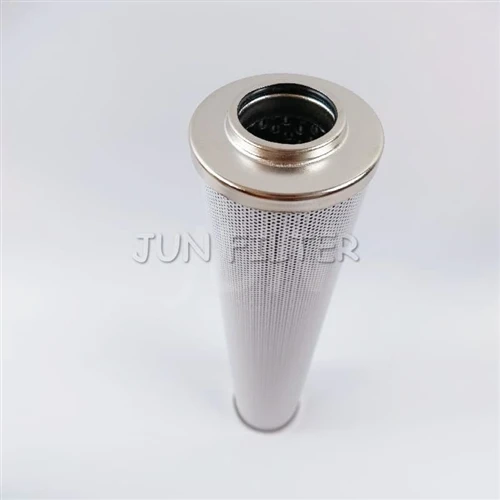
Structure Design
Gradient melt-blown filters feature a gradual pore size change from large outer layers to small inner layers, with outer layers capturing coarse particles and inner layers ensuring precision filtration. Standard filters have uniform pore size throughout.
Filtration Mechanism
Gradient filters achieve graded filtration, where coarse particles are trapped in outer layers and fine particles captured by inner layers, with各层 working synergistically. Standard filters rely on single-layer filtration where all particles are intercepted by the same pore size, placing heavy burden on the surface.
Dirt-Holding Capacity
Gradient filters fully utilize depth space, increasing dirt-holding capacity by 50%-100% compared to standard filters. Standard filters mainly rely on surface retention with low depth utilization, premature saturation.
Pressure Drop Rise Rate
Gradient filters with progressive filtration distribute particles evenly, resulting in slow pressure drop rise and stable differential pressure throughout service life. Standard filters experience rapid pressure drop increase after surface clogging, affecting flow rate.
Service Life
Gradient filters offer 50%-100% longer service life due to higher dirt-holding capacity and stable pressure drop. Standard filters require more frequent replacement due to surface clogging.
Filtration Performance
Gradient filters provide stable and filtration performance through progressive interception, preventing premature clogging. Standard filters suffer decreased efficiency after surface clogging with underutilized depth space.