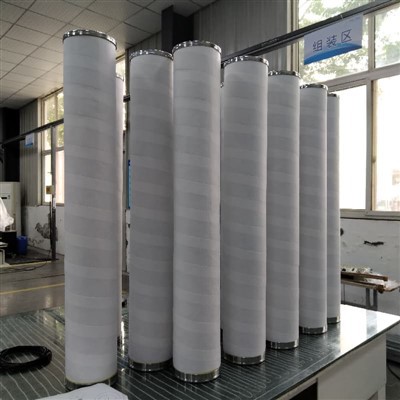


Products Description
Sintered Stainless Steel Customized 0.2um-80um.A key advantage of metal melt filter elements is their reusability. Their all-metal construction allows them to be cleaned and regenerated multiple times using methods such as backwashing, ultrasonic cleaning, or chemical treatments . This capability to restore filtration performance-often to over 90% of its initial state-significantly extends the service life of the element and reduces long-term operational costs compared to disposable alternatives .Sintered Stainless Steel Customized 0.2um-80um.
Introduction to Metal Filter Elements
Metal filter elements are made from stainless steel, copper, nickel alloys, etc., in forms such as sintered mesh, powder sintered tubes, and metal fiber felt. They offer high strength, heat resistance, and corrosion resistance.
Key Features
High mechanical strength, pressure and impact resistant
Withstand high temperatures (up to 600°C+)
Corrosion resistant for acidic, alkaline, and solvent environments
Uniform pore size with controllable filtration accuracy (typically 0.1–200μm)
Cleanable and reusable for extended service
Stable structure with no media shedding

Main Applications
Petrochemical: high-temperature and high-pressure media filtration
Pharmaceutical & Food: sterile and clarification filtration
Water treatment & Environmental: pre-filtration and gas dedusting
Aerospace & Hydraulics: precision oil and fluid filtration
Electronics & Semiconductors: high-purity gas and chemical filtration
Service Life
Under normal operating conditions, service life ranges from 1 to 5 years, depending on media properties, temperature, and cleaning frequency. Regular backwashing, ultrasonic cleaning, or chemical regeneration can significantly extend service intervals.
| Parameter | Range / Description |
|---|---|
| Cartridge Material | Stainless steel 304, 316L, Hastelloy, Titanium, etc. |
| Filtration Precision | 0.1 – 200 μm (optional) |
| Operating Temperature | -40°C ~ 600°C (material dependent) |
| Operating Pressure | ≤ 10 MPa (higher available on request) |
| Cartridge O.D. | 50 – 400 mm (customizable) |
| Cartridge Length | 200 – 3000 mm (customizable) |
| Connection Type | Threaded, Flanged, Clamp, Quick-connect |
| Seal Material | FKM, Silicone, PTFE, Metal gasket |

Operating Precautions for Metal Filter Elements
1. Clean the system piping before installation
Flush the pipeline thoroughly to remove weld slag, rust, and debris before installing a new filter element. This prevents large particles from mechanically damaging the element surface.
2. Control temperature and pressure ramp rates
Avoid sudden high-temperature or high-pressure shocks at startup. Gradually increase temperature and pressure in steps to prevent thermal shock or structural cracking.
3. Avoid excessive reverse differential pressure
Unless the element is designed for reverse flow, maintain forward pressure differential during normal operation. Excessive reverse pressure may damage the support layer or cause seal failure.
4. Monitor differential pressure regularly
Clean the element when the pressure drop reaches 1.5–2 times the initial clean value. A sudden spike indicates possible clogging or media abnormality – investigate immediately.
5. Choose the correct cleaning method
Select backwashing, ultrasonic, or chemical cleaning based on media properties. Do not use hard brushes or sharp tools on the surface to avoid damaging the filtration layer.
6. Dry and test integrity after cleaning
Dry thoroughly after cleaning to prevent rusting (for non-stainless materials). Perform a bubble point test to confirm no damage before reinstallation.
7. Verify chemical compatibility between media and material
Corrosion accelerates at elevated temperatures. Even if media is compatible at room temperature, check corrosion data sheets for high-temperature conditions.
8. Set replacement intervals based on actual operating conditions
Do not blindly follow manufacturer's recommended schedule. Adjust replacement timing based on pressure drop records, filtration performance, and cleaning recovery to balance cost and safety.
9. Protect against rust during long-term shutdown
If not in use for extended periods, clean, dry, and store in sealed conditions. Apply rust preventive oil or nitrogen purge if necessary to avoid atmospheric corrosion.


FAQ


Hot Tags: sintered stainless steel customized 0.2um-80um, China sintered stainless steel customized 0.2um-80um manufacturers, factory