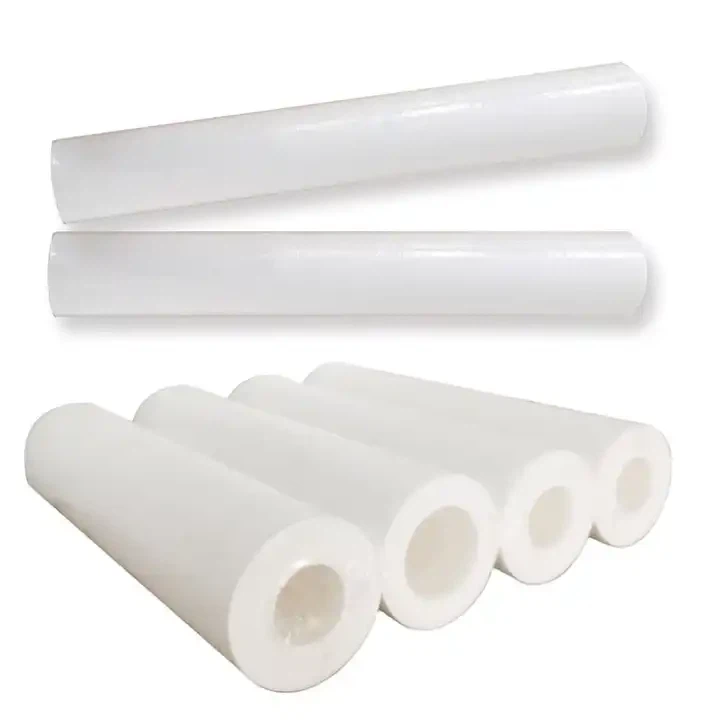
"High-tech empowerment of precise filtration solutions" is the core direction of the current development in the filtration industry. It means upgrading the filtration system from "simple separation" to a precise, intelligent, and reliable integrated solution through the integration of cutting-edge technologies.
The core technologies are empowered through the following three levels:
Advanced material science is the foundation
Nanocomposite filter materials: As you have previously noticed, by integrating nanofibers, activated carbon, metal-organic frameworks, etc., ultra-high precision interception and selective adsorption/catalysis can be achieved, capable of simultaneously removing particulate matter and molecular-level pollutants.
Special membrane materials: Such as polytetrafluoroethylene (PTFE) membranes and polyvinylidene fluoride (PVDF) membranes, which have characteristics such as chemical corrosion resistance, high temperature resistance, hydrophobicity or hydrophilicity, and can meet the precise filtration requirements in extreme environments.
Intelligent sensing and control is the "brain"
Real-time monitoring: Integrating pressure difference, flow rate, turbidity, and even online particle counters, sensors can reflect the status and filtration effect of the filter element in real time.
Predictive maintenance: Based on data, predicting the lifespan of the filter element, changing from "regular replacement" to "as-needed replacement", improving reliability and reducing costs.
Adaptive adjustment: The system can automatically adjust operating parameters (such as backwashing frequency) based on changes in influent water quality or flow rate, maintaining optimal performance.
Digital and integrated technologies are the "framework"
Digital management: Through the Internet of Things platform, remotely monitor and manage filtration systems across various locations, achieving data analysis and optimization.
Process deep integration: Integrating filtration units with upstream and downstream processes (such as pretreatment, sterilization, desalination) to provide stable and reliable full-process solutions.
"Turnkey" projects: From design, manufacturing to installation, commissioning, and operation and maintenance services, providing highly customized and integrated solutions. Main application scenarios
High-tech empowerment of precise filtration has become a standard and key guarantee for the following high-end industries:
Semiconductor manufacturing: Producing ultra-pure water, high-purity gases and chemicals required for chip production, with filtration accuracy reaching nanometer or even ionic levels.
Biopharmaceuticals: Filtration of drug solutions, sterilization of culture media, and removal of viruses, as well as aseptic treatment of fermentation air, directly related to drug safety.
New energy: Ultra-clean filtration of lithium battery electrolytes and hydrogen fuel cell reaction gases, which are core links to ensure battery performance and safety.
Food and beverages: Ensuring sterile cold filling of final products, extending shelf life and preserving flavor.
In the future, precise filtration will tend towards an "intelligent system" of "perception - decision - execution" integration. For enterprises like Xinxiang Jun Filter, the focus of efforts includes:
Deepening material research and development: Continuously developing more functional, longer-lasting, and more environmentally friendly composite filter materials.
Laying out intelligent systems: Integrating sensors, data algorithms with filter elements to enhance product value.
Providing industry solutions: Deeply specializing in growing fast industries such as semiconductors and new energy, providing deeply customized filtration solutions.